Tella Licensing
Licensing platform engineered to reduce support load, protect paid resources, and keep checkout-to-activation friction low for FiveM creators and buyers.
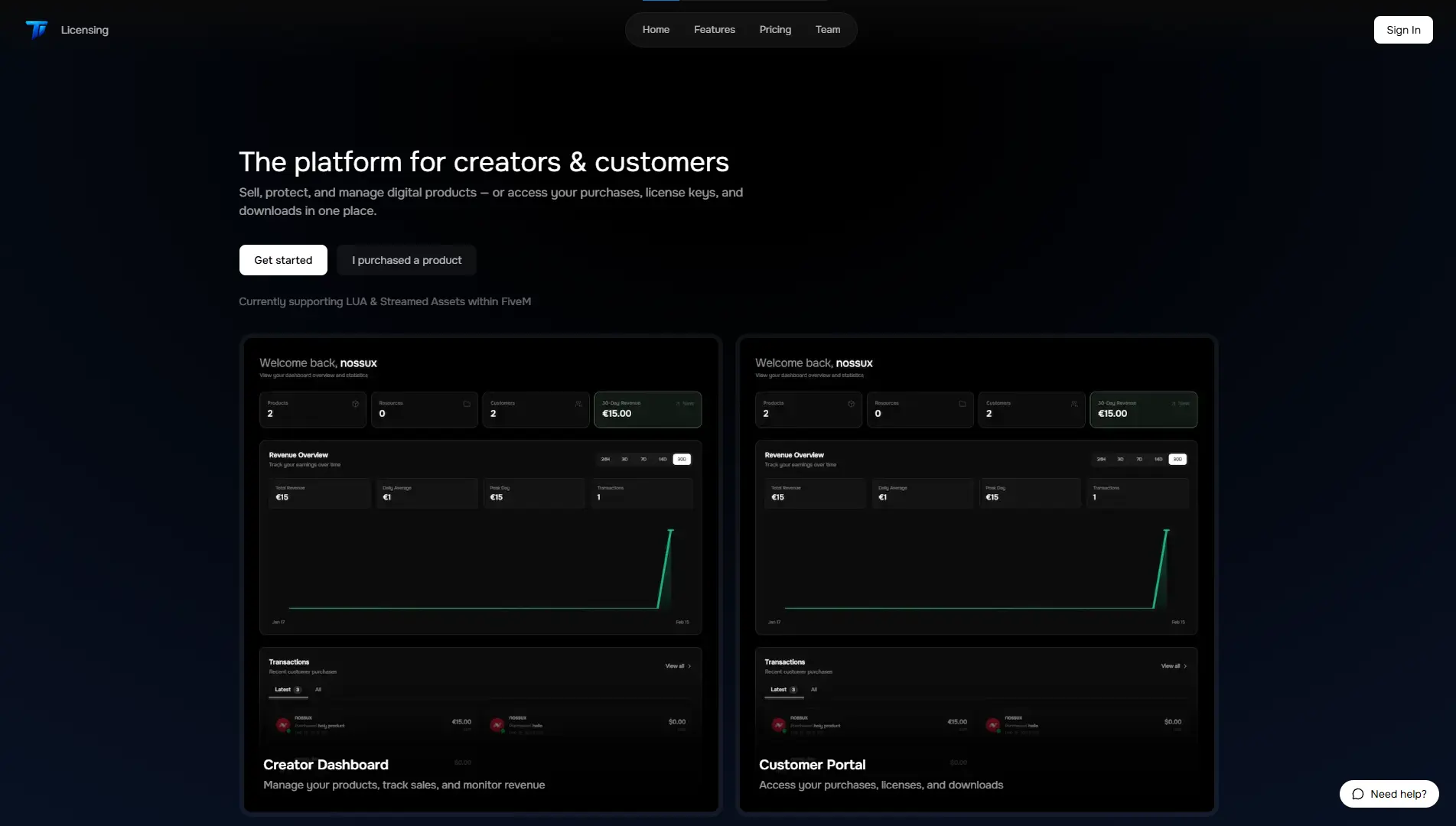
Problem
FiveM creators were burning time on manual key handling, entitlement disputes, and repeated onboarding questions.
This created three business-level risks:
- Slow fulfillment and high support overhead.
- Poor buyer confidence after checkout.
- Unauthorized redistribution pressure on paid resources.
The brief was clear: build a licensing system that is secure under live usage, fast for buyers, and operationally light for sellers.
Next step: See the approach used to solve it
Approach
The product was designed around end-to-end lifecycle control instead of isolated key generation.
- Unified product surfaces:
- Conversion-oriented landing page.
- Customer portal for ownership, keys, and activations.
- Creator dashboard for products, delivery, and Stripe-backed operations.
- Runtime validation architecture:
- FiveM resources send license payloads to a validation API.
- API verifies ownership, policy state, and activation rules.
- Resources unlock only after successful encrypted validation response.
- Business-model alignment:
- Developers connect their own Stripe account.
- Product revenue flows directly to creators.
- Platform sustainability is handled by subscription, not sales commission.
This reduced operational friction while preserving security and trust in the purchase-to-activation path.
Next step: Jump to measurable results
Results
- Manual key and entitlement operations moved to automated workflows.
- Buyers gained a cleaner post-purchase path with less support dependency.
- Creators kept 100% of product revenue through direct Stripe ownership.
- Platform-level monetization remained predictable through subscription billing.
The project validated that in this market, UX quality and security quality must ship together.
Next step: Review technical specs used for this build
Technical Specs
- Project Type
- FiveM licensing platform with creator and customer surfaces.
- Primary Stack
- Next.js, Tailwind, Headless UI, Prisma, Stripe.
- Runtime Validation Model
- API-backed encrypted checks from FiveM resources before execution unlock.
- Core Constraint
- Reduce support burden without weakening anti-sharing controls.
- Operational Outcome
- Manual key lifecycle tasks were replaced by self-serve flows and policy-driven automation.
- Monetization Model
- Direct creator payouts via Stripe plus recurring platform subscription billing.
Preview
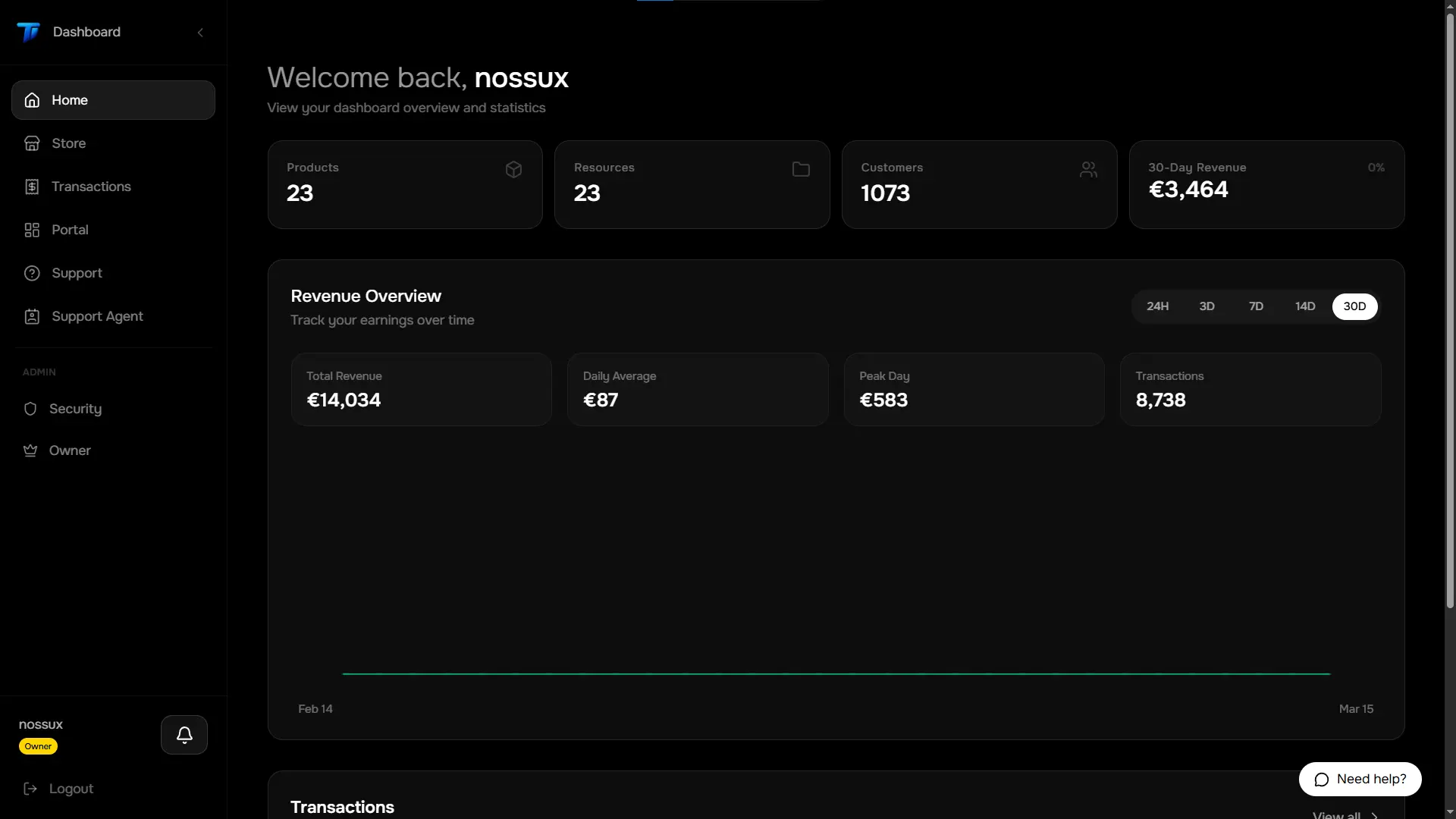
Developer dashboard view showing product, key, and entitlement management workflows.
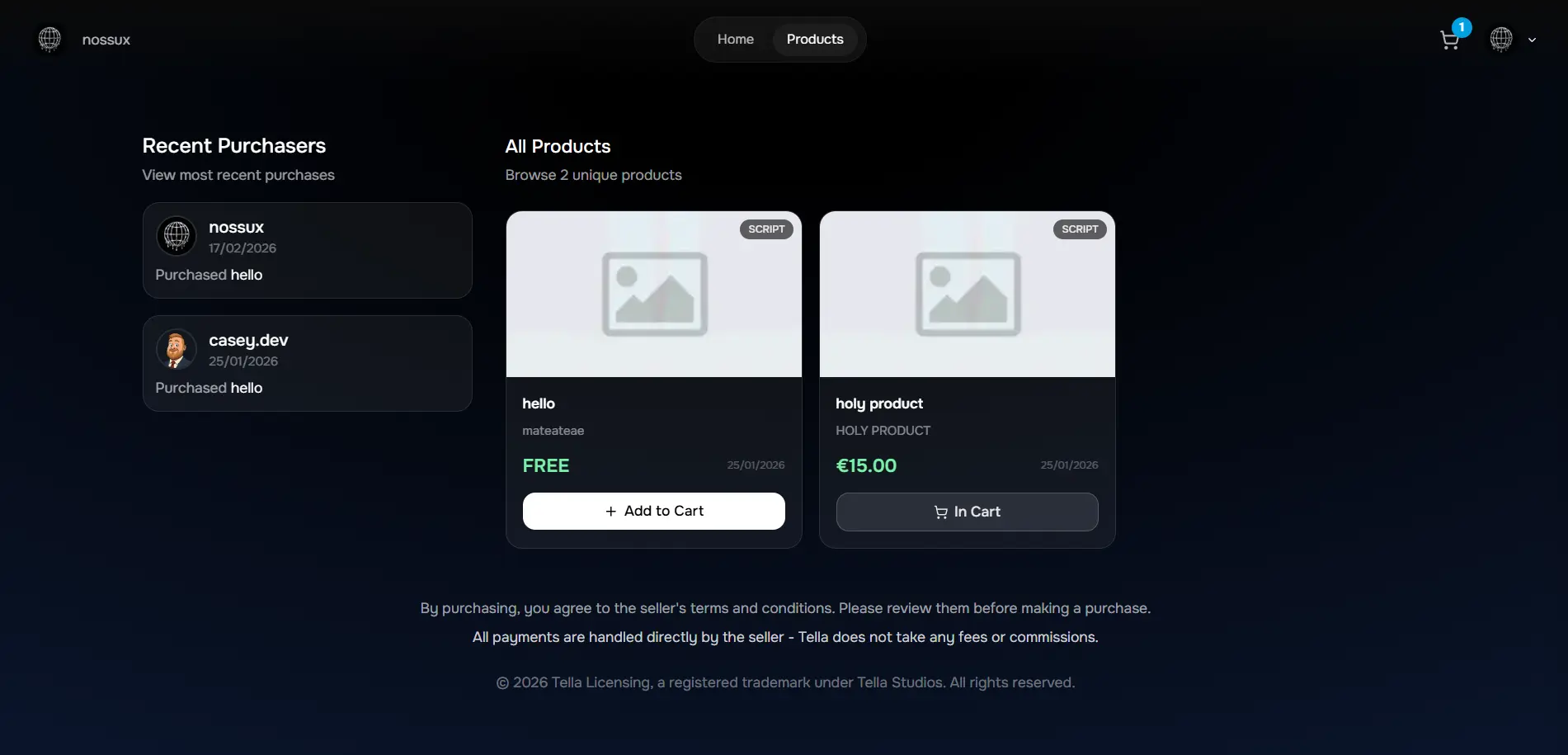
Storefront experience used by customers to browse resources and complete Stripe checkout.
Next Step
If this workflow matches your server goals, continue with Project Massachusetts: onboarding + MDT.